


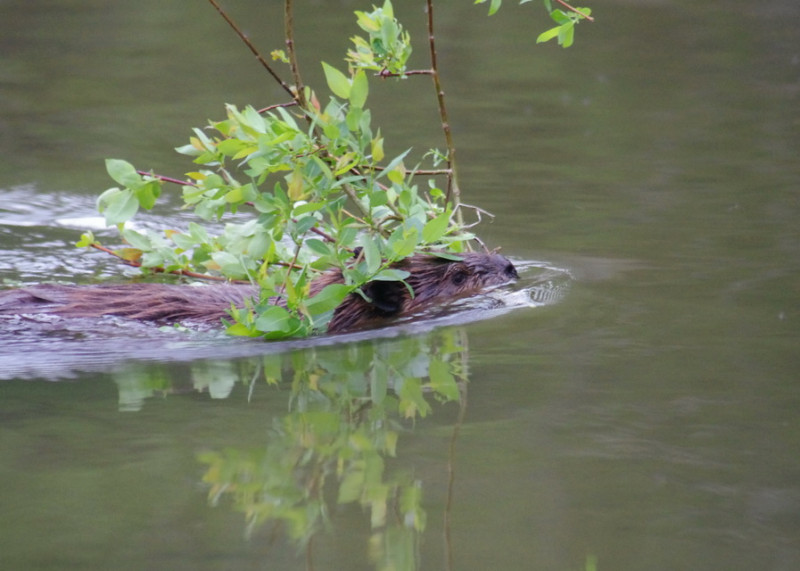
The Ann & Sandy Cross Conservation Area is an important watershed, with 19 natural springs, tributaries to Fish Creek, and headwaters of Pine Creek. Beaver, essential stewards of the ecosystem, once thrived in the area.
Through the years we have worked with various partners, including Alberta Institute for Wildlife Conservation, The Alberta Riparian Habitat Management Society (Cows and Fish), and the Miistakis Institute. This project has received support from numerous organizations, including Alberta Conservation Association, Alberta Ecotrust Foundation, Calgary Foundation, and Land Stewardship Centre of Canada.
Beavers play a key role in healthy water ecology and provide the means for a flourishing ecosystem. Many animals benefit from the presence of beavers.
Our aim is to rehabilitate and reintroduce beaver, to give them a second chance in a natural setting where they are less likely to be threatened by human activity, and through these efforts restore and replenish the Pine Creek watershed.
Beavers and Wetland Management
Watch our Video
Former Ann & Sandy Cross Conservation Area CEO Greg Shyba discusses our project to restore wetland habitat and improve water quality by reintroducing beavers to the north arm of Pine Creek. Footage courtesy Gord Hayes (2017)
Beaver Release
Rescued beavers reintroduced
In 2018, two beavers rescued and rehabilitated by the Alberta Institute for Wildlife Conservation (AIWC) were released onto the ASCCA. The pair were unusual as they bonded while in captivity despite the fact that this is not usually the case if beavers are unrelated. While it can be difficult to keep track of released wildlife on our 4800-acre conservation area, we believe that these beavers and other animals released onto the area have been given a second chance at living naturally.
Did you know? Beavers aren’t the only wildlife rehabilitated and released by AIWC. We have also worked with them to release Muskrat and Swainson’s Hawks.
For more information, visit their website https://www.aiwc.ca/
Beavers and BDAs
"BDAs have the potential to significantly enhance watershed health by improving water retention, restoring wetland habitat, and increasing biodiversity along Pine Creek within ASCCA. Hopefully, we can create the right ecological conditions to naturally support the return of beavers and further sustain a healthy self-regulated ecosystem."
Ryan Caswell, CEO of Ann & Sandy Cross Conservation Area
What is a BDA?
A BDA (beaver dam analogue) is a human-made habitat management tool designed to mimic the function of a natural beaver dam. BDAs are typically constructed using posts and natural materials such as willow or spruce branches, mud, and sod sourced from the surrounding habitat.
By slowing the flow of water and encouraging it to spread across the landscape, BDAs help restore and improve riparian and wetland habitat. This increases water storage and creates healthier conditions for plants, wildlife, and aquatic ecosystems.
Why BDAs?
Through an ongoing partnership with Working with Beavers, ASCCA is using BDAs to help restore degraded riparian habitat and create conditions that support the return of beavers to the area.
Beavers were historically prevalent throughout this landscape, but their populations declined due to a combination of factors, including hunting, environmental changes, and increasing development.
By constructing and maintaining BDAs, we hope to restore the wetland habitat that beavers need to thrive. In time, these restored areas can provide lasting habitat and refuge for beavers and many other species.
Visit the Working With Beavers BDA Story Map.